
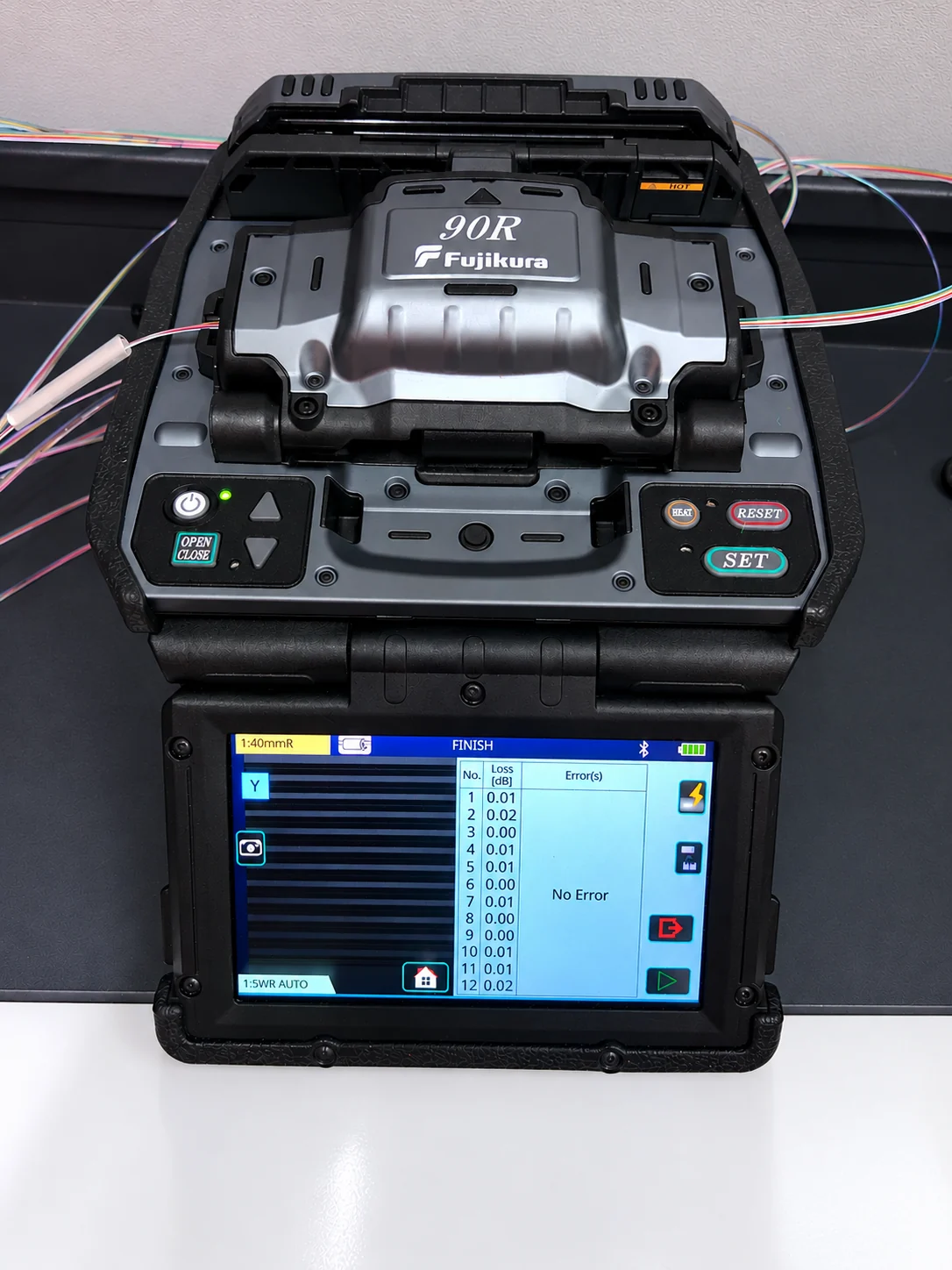
From individual fibre splicing to ribbon fibre splicing a dependable connection starts with precission splicing. We support fibre splicing in numerous environments from data centers and exchanges all the way to customers premises.
- Fiber cable preparation and fiber cleaning
- Fiber routing, tray management and storage
- Fiber storage in enclosures, ODF's or cabinets
- Fiber cable labelling for cable identification
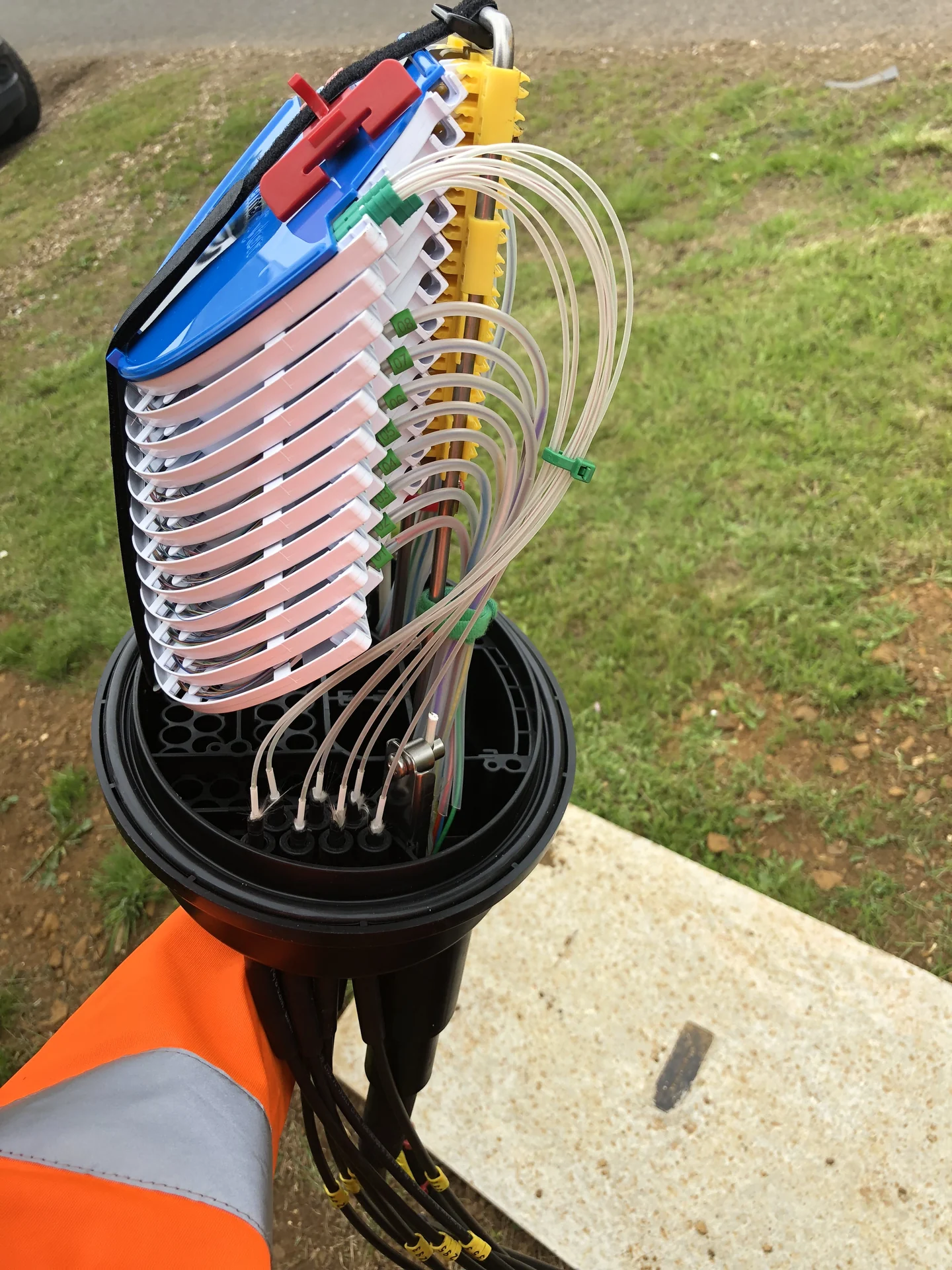
Bring the network together with cable routing, splitter connections, and closure assembly. Our approach keeps the physical installation accessible and the fibres opperating at maximum bandwidth.
- FTTH and FTTX network build
- Closure assembly and splitter integration
- Chamber cable routing and slack management
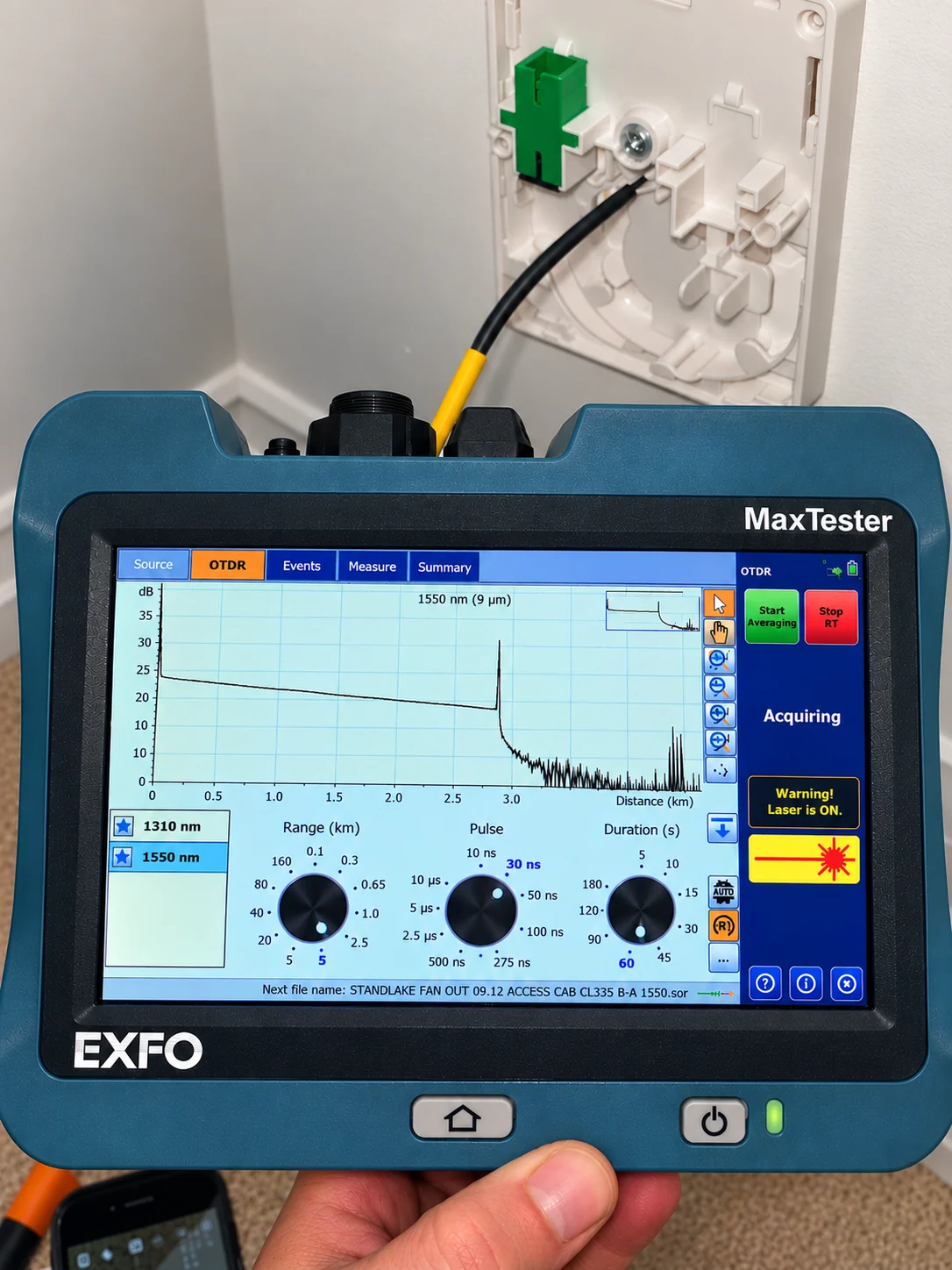
Testing gives the physical installation a measurable record. We support OTDR, IOLM, Power meter, bi-derectonal test and live network build testing. These test results give a measurement parameter to ensure we meet the requirements agreed for your project.
- OTDR testing for identifying faults and measuring attenuation and insertion losses
- IOLM testing for certifying losses on splitters
- Power meter testing for checking light levels being received
- Live fiber testing when working on active existing networks to ensure a continus uninterrupted network connection on operational fibres
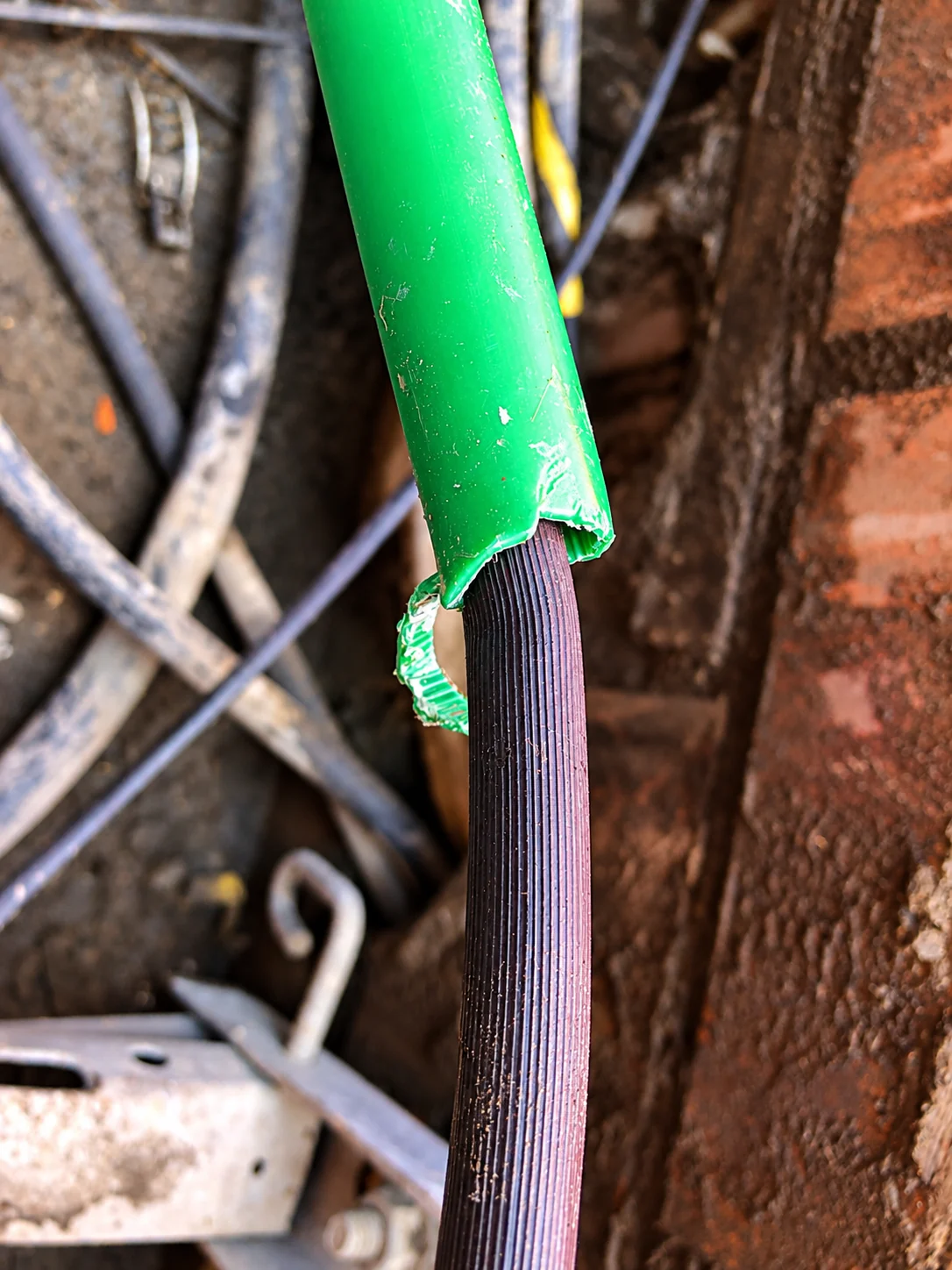
When a network fault needs attention, the first step is understanding the fault. We assess the affected fibre, plan a solution to rectify the fault identified and then we test the connection after the work.
- Fibre fault identification
- Closure access, repair, and re-splicing
- Post-repair testing and updated records
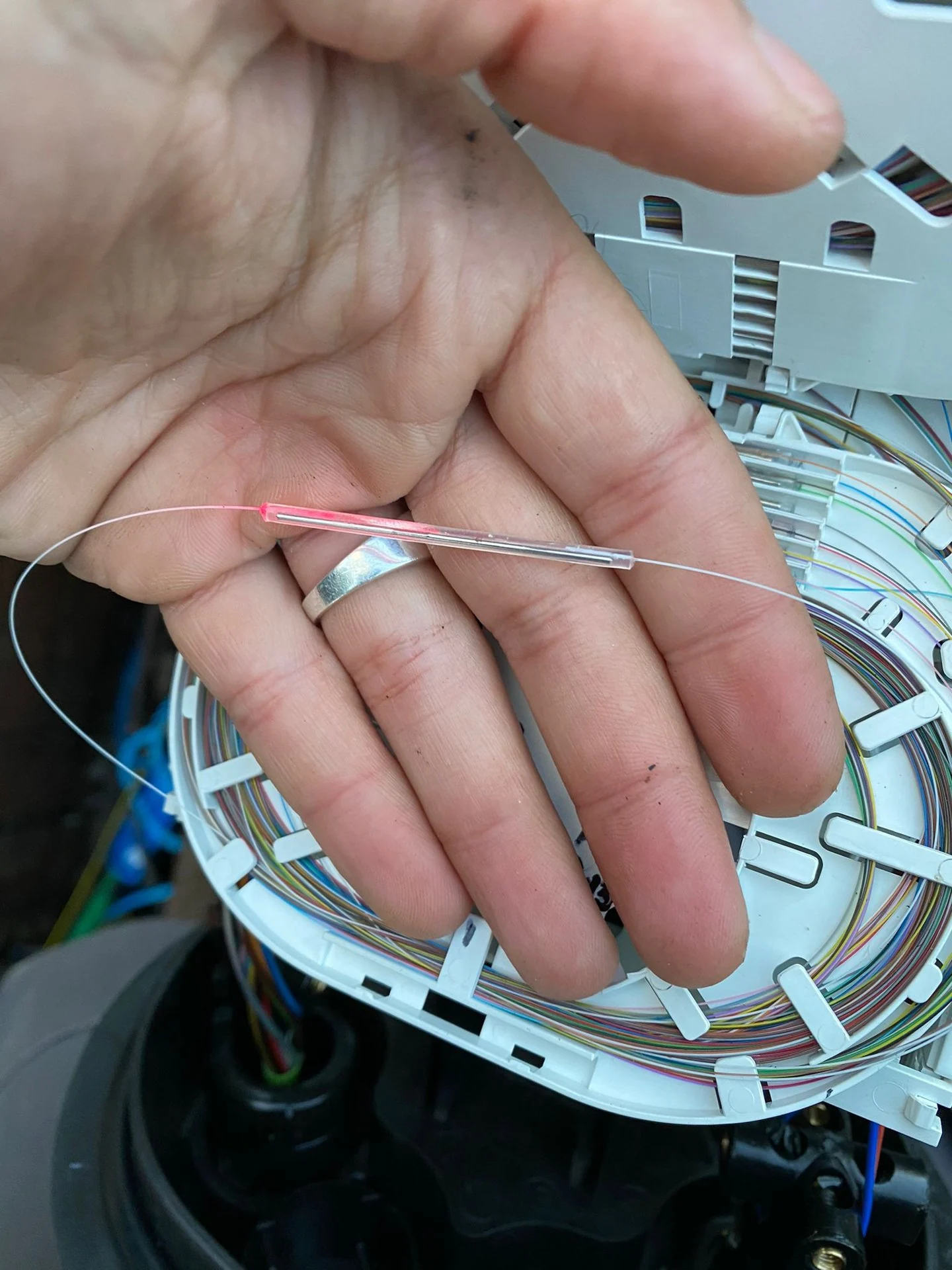
Emergency Response Services
Emergency - Urgent network response.
- Fibre cable breaks: Rapid fault investigation and repair following accidental cable cuts or damage.
- Network outages: Fault identification, fibre splicing, testing and restoration support.
- Third-party damage: Emergency assistance following roadworks, construction activity or utility strikes.
- Damaged infrastructure: Repair and replacement of damaged ducts, chambers, joints and associated fibre components.
- Critical network faults: Support for business-critical links, data centres, telecom infrastructure and other essential connectivity.
- Cable faults and degradation: Investigation of fibre performance issues, signal loss and intermittent connectivity.
Preventative Works
Not every emergency needs to happen without warning. We also help clients prepare for foreseeable risks through scheduled interventions, including:
- Planned utility and construction works: Fibre diversion, protection or relocation ahead of excavation and infrastructure projects.
- High-risk excavation support: Fibre route identification, protection and engineering attendance where cable damage is a foreseeable risk.
- Planned network migrations: Controlled fibre transfers, cutovers and reconnections to minimise disruption.
- Preventative maintenance: Inspections, testing and repairs to identify potential failures before they escalate.
- Infrastructure upgrades: Planned replacement of vulnerable cables, ducts, joints and network components.
- Out-of-hours interventions: Scheduled evening, overnight or weekend works where required to reduce the impact on customers.
- Contingency planning: Preparing response procedures and resources for anticipated network risks, major projects and critical maintenance.
Our Commitment
We understand that network downtime can affect customer confidence, business operations and service availability. Our focus is to identify faults urgently, coordinate the appropriate engineering response and restore network performance with minimal avoidable disruption.
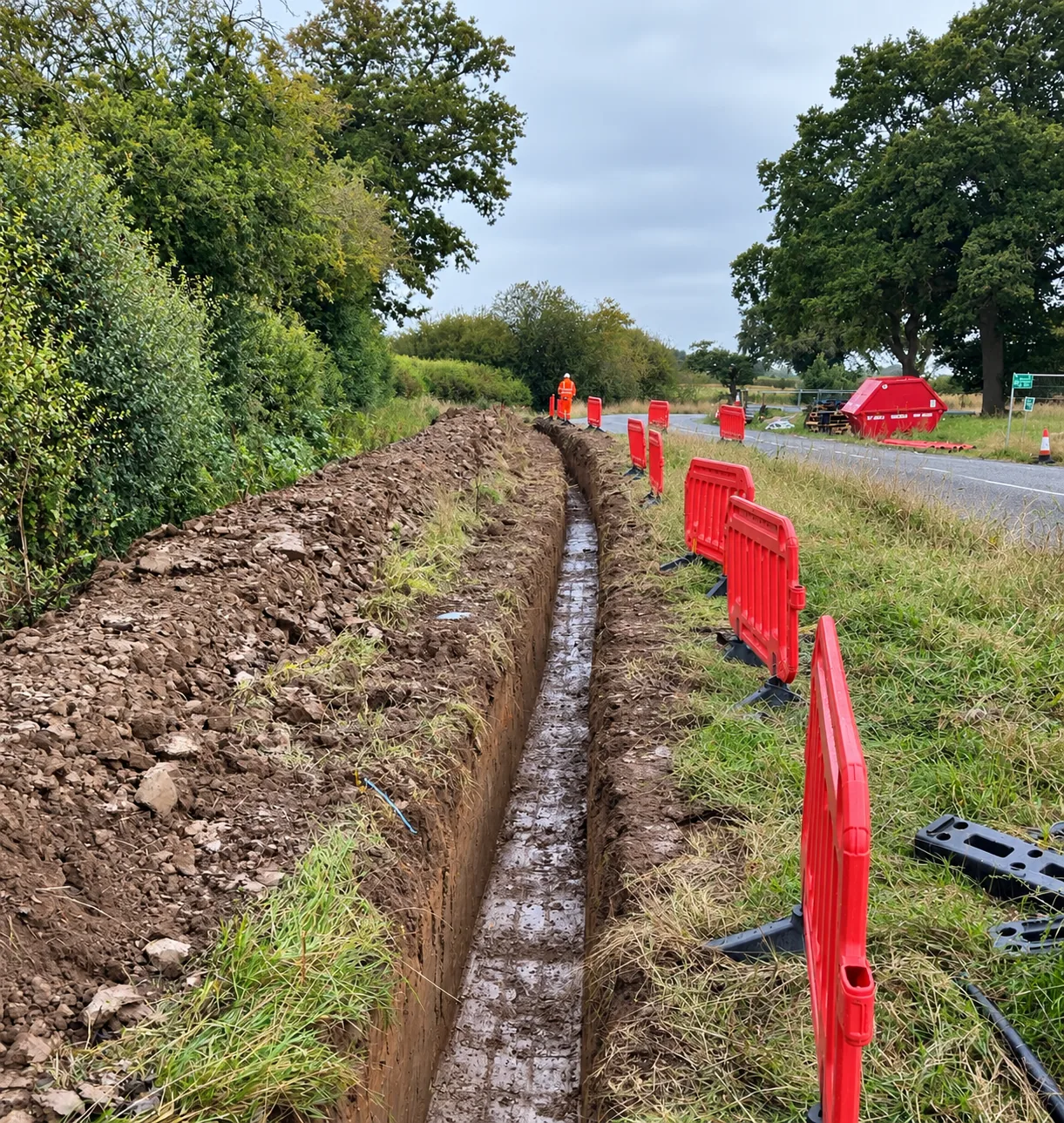
Civils
Site Surveys & Route Planning: Conducting initial ground assessments, utility mapping, and route designing to determine the safest and most efficient path for the network.
Permitting & Wayleave Management: Securing legal rights-of-way, land permissions, and local authority or municipal approvals before starting excavation.
Trenching & Excavation: Digging standard open trenches or utilizing microtrenching (narrow, shallow cuts in pavements or roads) to minimize public disruption.
Duct & Conduit Installation: Laying high-density polyethylene (HDPE) or PVC ducts, tracer wires, and warning tapes to protect future fiber cables.
Surface Reinstatement & Restoration: Paving, asphalting, or turf restoration to return roads, sidewalks, and private properties to their original condition.
Discuss your civils requirements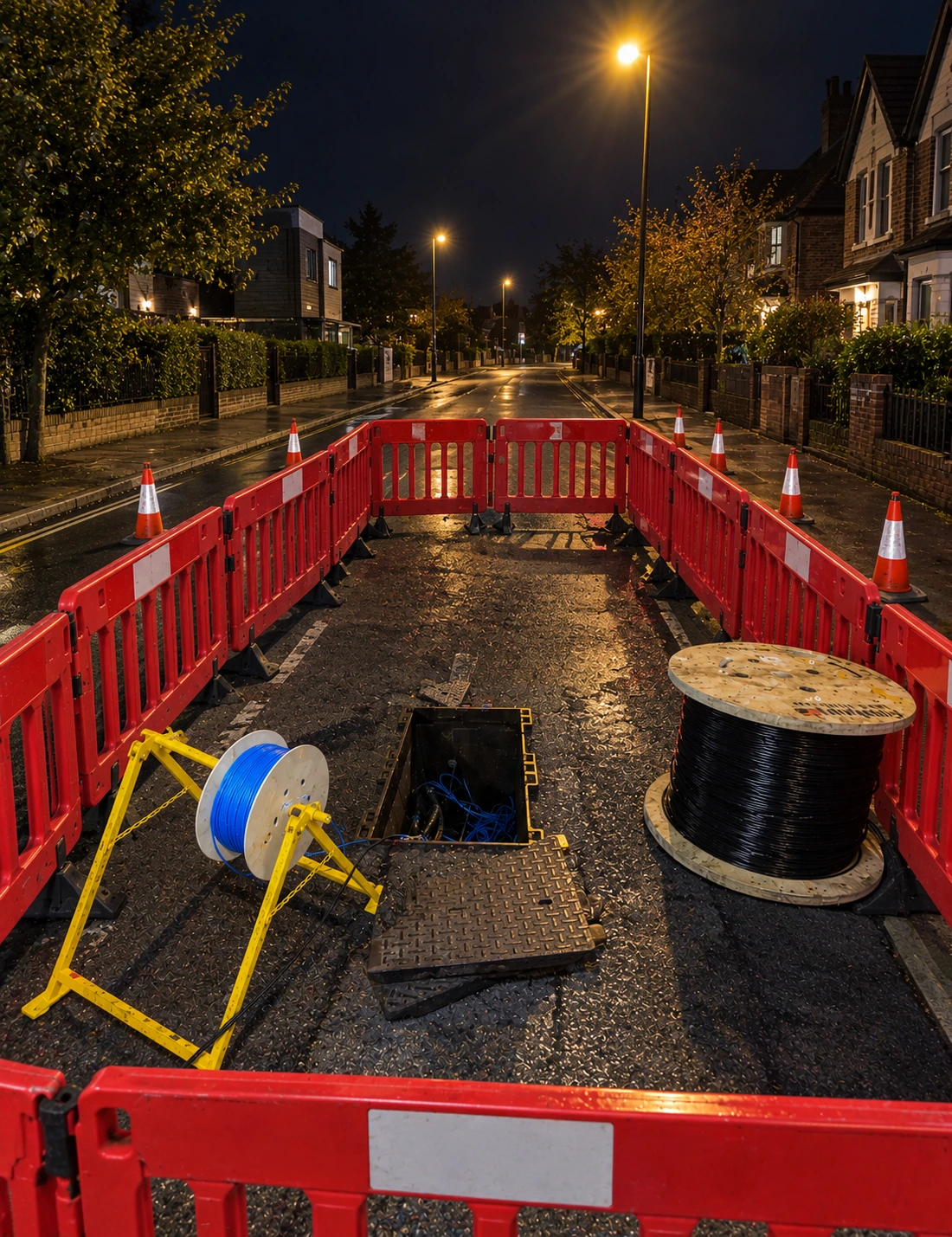
Cabling
Cable Pulling
Cable pulling is the traditional manual / mechanical method where a physical rope or pull-tape is drawn through a duct, attached to the fiber cable, and pulled across the planned route.
Cable Blowing
Cable blowing uses a combination of high-pressure compressed air and mechanical pushing assistance to float and propel fibre cables or fiber bundles through clean microducts.
Discuss your cabling requirementsSee the details for yourself.
Explore splice trays, closures, chamber installations, and test equipment from the project archive.
View project photographyField photography from our project archive, including UK sites. Images illustrate workmanship and installation stages.
A clear path to connection.
Practical coordination at each stage of your fibre project.
- 01 / PREPARE
Start with the details.
Review the route, cable specifications, fibre schedule, site access, and required test criteria.
- 02 / CONNECT
Build with care.
Install the Cable, Prepare and Splice the cable, Test the installed network, all delivered with a commitment to safety, environmental responsibility and sustainable working practices.
- 03 / VERIFY
Document the connection.
Test against the agreed requirements and prepare results, labels, and photographs for handover.
From your next splice
to your next network.
Tell us about your site, fibre count, and project requirements.